







![Coach’s Corner: Konopasek on Iron volleyball’s 34-6 run, what’s next [video]](https://nchsinkspot.com/wp-content/uploads/2025/11/Vball-season-recap.00_00_02_22.Still005.png)


![Postgame: Volleyball falls to Marist in supersectional [video]](https://nchsinkspot.com/wp-content/uploads/2025/11/Vball-postgame.png)


![Halloween candy cross section quiz [quiz]](https://nchsinkspot.com/wp-content/uploads/2022/10/Candy-cover-big-900x675.png)
![Average Jonah? [quiz]](https://nchsinkspot.com/wp-content/uploads/2022/05/average-jonah-900x600.png)



![[Photo Illustration]](https://nchsinkspot.com/wp-content/uploads/2025/09/trigger-words-1.png)


![On the Spot: Students, staff share their takes on groundbreaking music [video]](https://nchsinkspot.com/wp-content/uploads/2026/02/Untitled-7-1.png)

![The Up-Beat – Snow, stage sets and an Illinois upset [video]](https://nchsinkspot.com/wp-content/uploads/2026/01/Untitled-10.png)
![Coaches’ Corner: Witzig, Feeney break down team identity, key growth, the road to March [video]](https://nchsinkspot.com/wp-content/uploads/2026/01/Coaches-Corner-Jan-21-1200x675.jpg)
![On the spot: Community’s favorite movies [video]](https://nchsinkspot.com/wp-content/uploads/2026/01/On-the-Spot-7.png)


![On the Spot: Staff, students sound off on the Chicago Bears’ playoff run [video]](https://nchsinkspot.com/wp-content/uploads/2026/01/On-the-Spot-4.png)
![Hauntcert performers on why this year’s show hits all the right notes [video]](https://nchsinkspot.com/wp-content/uploads/2025/10/Untitled-2.png)


 Have you ever read a book you thought was a bit too intense for school?
Maybe it was an assigned read, or something you pulled off the library shelf on your own. But what if one day that book just disappeared? Poof. Gone, leaving nothing but empty space where it used to be.
Right now, Illinois law keeps that from happening—at least in theory.
In 2023, Illinois became the first state in the country to ban book bans, requiring all public and school libraries to adopt anti-censorship policies or risk losing state grant funding. It was a big deal. Our shelves stayed full.
But the pressure is coming from a different direction now.
Federal lawmakers have proposed legislation—including the Stop the Sexualization of Children Act in the current Congress—that would cut federal education funding to schools that provide materials with sexually oriented content to students under 18.
While the intentions behind a bill like that sound reasonable on the surface, the problem is what falls under its shadow. It would effectively remove stories with non-cis characters from library shelves.
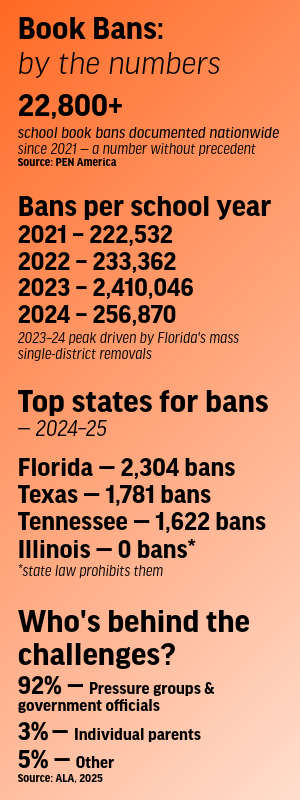
PEN America, a free speech advocacy organization, has documented nearly 23,000 book bans in public schools nationwide since 2021, with the most targeted titles overwhelmingly being books that explore race, LGBTQ+ identity and, yes, sexual content—even when that content exists to teach something important.
The American Library Association recorded 5,668 books banned from libraries in 2025 alone, the highest number ever documented in its history.
These five books could all end up on that list. Some already are. Whether or not any new legislation passes, they deserve your attention now—because you might not always get the chance.
5. “Lord of the Flies” by William Golding
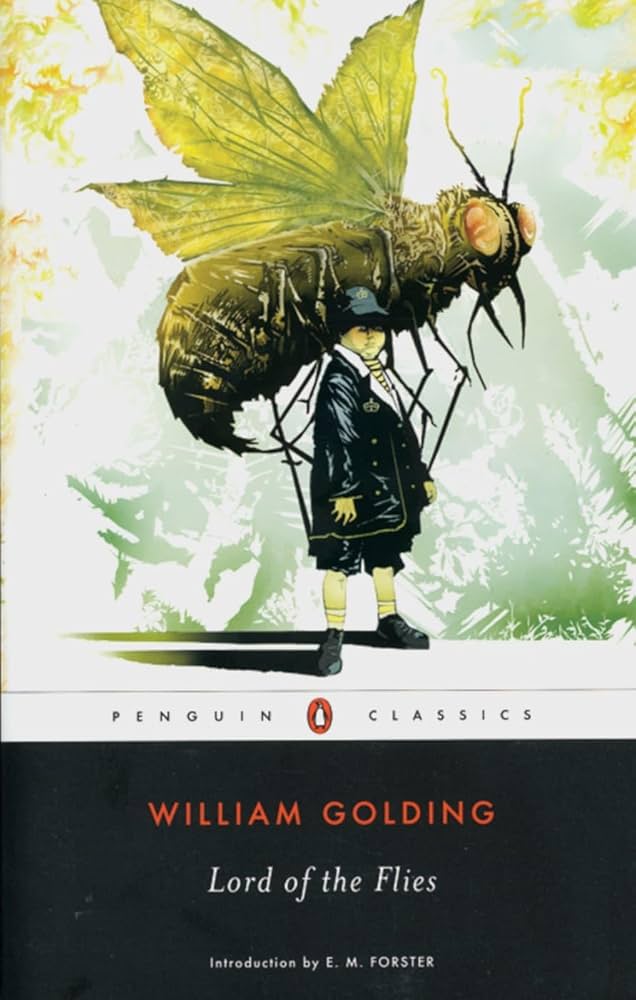
Imagine reading a book about British boys running wild on an island, shedding their clothes and their civilization in equal measure until they become something genuinely terrifying.
Sounds more like a Netflix series than a required read in sophomore English, right?
That’s exactly why it keeps landing on challenged-books lists—the language is rough and the violence is disturbing in a way that sticks with you.
But here’s the thing: those are also the exact reasons it belongs in schools.
Not to teach anyone British insults or what happens when a group of boys has access to a large rock and no adult supervision (though you’ll witness both).
The point is what the book reveals about human nature itself—how quickly order collapses when fear takes over, and how the savagery that emerges isn’t some outside force but something that was always there, underneath.
Here’s what most people miss about this book: Golding wrote it in 1954, and the boys British background is not an accident.
At the time, the British Empire was actively falling apart—India had won independence, Kenya was in the middle of a brutal colonial war, and the idea that British civilization was something the world should be grateful to receive was getting harder to sell.
Golding knew that.
The boys don’t just represent “people.”
They specifically represent a culture that had spent centuries showing up on other people’s shores, claiming to bring order and reason to “savages”—and then doing some extraordinarily savage things in the process.
When Jack paints his face and leads his hunters into a ritual frenzy, he looks a lot like every colonial caricature Britain ever projected onto someone else.
The beast isn’t lurking in the jungle; it shipped out from England.
That’s the critique buried in the novel, that the civilization these boys are trying to protect—and failing to—is the same civilization that produced the empire.
Golding isn’t just saying humans are capable of violence. He’s saying that the most violent thing of all might be convincing yourself you’re the civilized one.
In a moment when it’s tempting to assume the worst about people, or the best, this book insists on a more complicated truth: we’re capable of both, and the distance between them is thinner than we’d like to think.
It’s been challenged in schools for decades. The world seems to keep making it more relevant.
My Personal Take: It is a good read, and a classic for a reason, just not the best.
4. “Of Mice and Men” by John Steinbeck
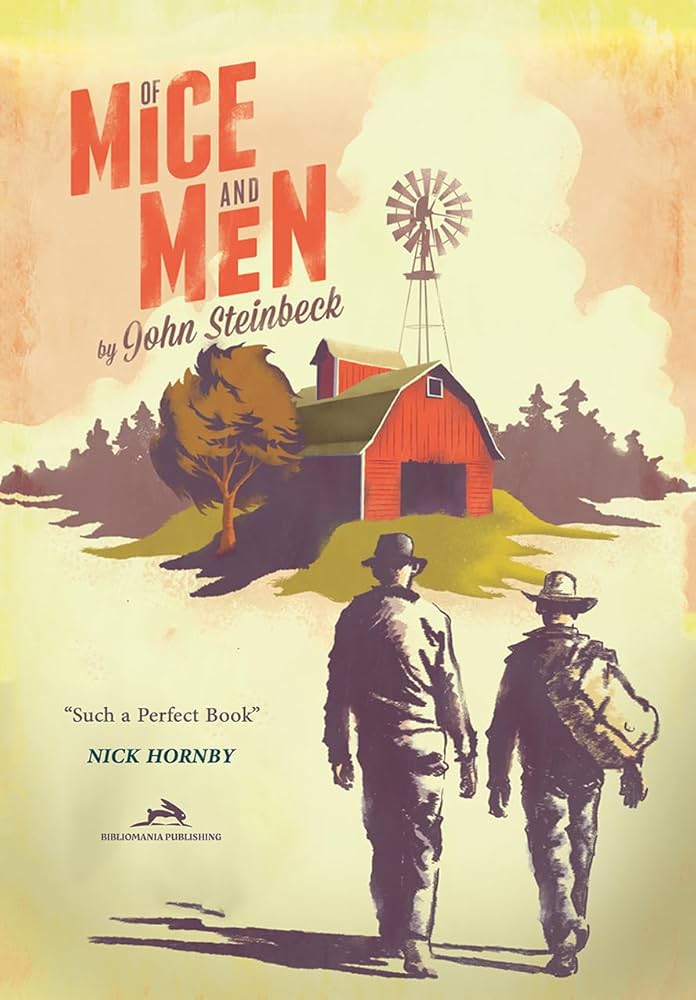
This one is ranked higher than “Lord of the Flies” because it hits differently.
While Golding is asking what people are capable of in extreme circumstances, Steinbeck asks what happens to people when ordinary life grinds them down—and his answer is just as devastating.
Curley’s wife is called some genuinely awful things throughout this book, and the men around her treat her as an object and a threat rather than a person.
That’s uncomfortable to read.
That’s the point.
Steinbeck wrote her that way to indict the world she’s trapped in, not to celebrate it.
She’s lonely, overlooked and ultimately destroyed—not because she deserved it, but because of the way women were seen and discarded in Depression-era America. Reading her that way, rather than the way the men in the novel read her, is the entire exercise.
But Curley’s wife isn’t the only person in this book that the world doesn’t know what to do with.
Lennie Small has an intellectual disability that’s never named in the novel—in 1937 there wasn’t much language for it, just people who were too much work, too much need, too much of a problem to accommodate.
What’s remarkable is how carefully Steinbeck refuses to let you read Lennie as a problem.
He’s gentle. He loves soft things. He doesn’t understand his own strength and he’s genuinely terrified when things go wrong.
He’s also, like Curley’s wife, perceived by the people around him as a threat rather than a person—something to be managed, apologized for or eventually eliminated.
That’s the real argument of this novel: Curley’s wife and Lennie are mirrors of each other.
Both are people a Depression-era world had no patience for.
Both are seen as burdens or dangers rather than full human beings.
Both are destroyed not by their own failures but by a system that couldn’t accommodate their existence.
The tragedy isn’t how the novel ends, it’s that the novel’s universe made it feel unavoidable, almost necessary.
The book has appeared on challenged and banned lists across the country for decades, often flagged for racial slurs and sexual themes. The racial language is real and it’s jarring—and it’s also historically accurate in a way that sanitizing it would undo.
This is not a comfortable book, but comfort shouldn’t be the goal when it comes to art.
My Personal Take: Not the best of the classics, but impactful and genuinely heavy—worth every page.
3. “They Both Die at the End” by Adam Silvera
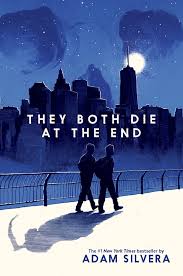
Here’s where things get more current. Unlike the classics above, this is a modern YA novel—and it’s challenged for very different reasons.
“They Both Die at the End” follows two boys who receive a call that they’ll die before midnight. They spend their last day together, and they fall in love.
That’s it.
There’s no explicit content.
What there is, though, is a queer romance, and for a growing number of challengers and legislators, that alone qualifies a book for removal.
Of the nearly 23,000 book bans documented since 2021, PEN America found that books featuring LGBTQ+ characters or themes are among the most consistently targeted—accounting for 40 percent of the unique titles challenged in 2025.
What gets lost in the push to remove books like this one is what they actually do for readers.
Representation in literature isn’t a political gesture—it’s a practical one.
When a teenager who’s never seen their own experience in a book finally finds it, that matters in ways that outlast any single story.
And for readers who don’t share that experience, a book like this one builds something just as important: the ability to understand a life different from your own.
It’s also, separately, a beautiful book about making the most of the time you have.
That part apparently doesn’t make the news.
My Personal Take: Still not number one, but close.
2. “To Kill a Mockingbird” by Harper Lee
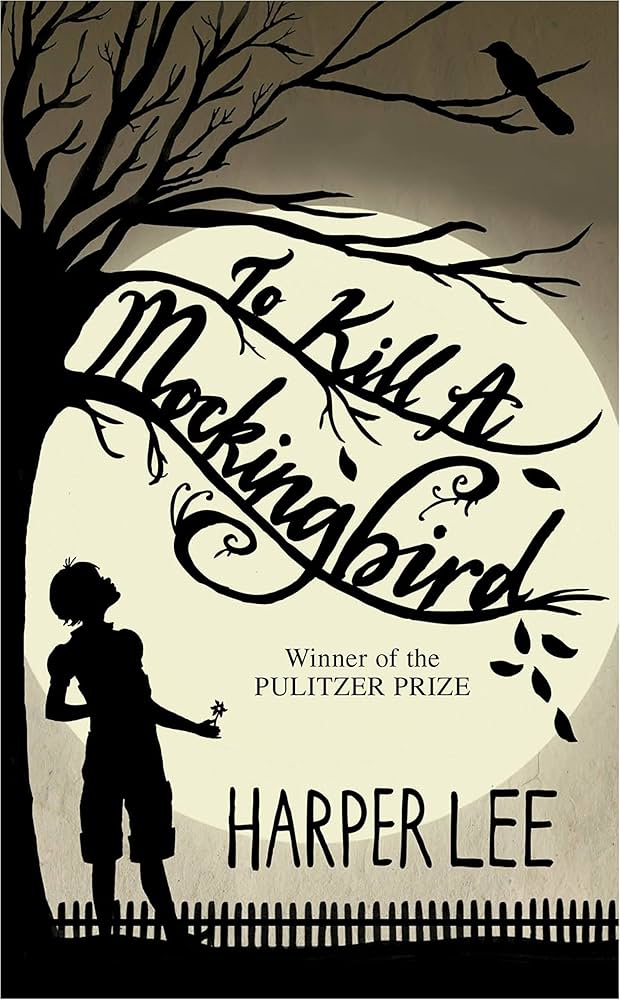
If you haven’t read it yet, you probably will. “To Kill a Mockingbird” is one of those books that precedes itself—you hear about it from older kids, know it’s coming, build it up before you’ve opened the cover.
The book has been challenged and banned more than almost any title in American literature, and the reasons have shifted over the decades.
In earlier years it was the racial language; now it’s more often the sexual violence at the center of the trial.
If federal legislation restricting books with sexual content in schools advances, this one faces real exposure.
Here’s why that would be a loss: the sexual assault in this book isn’t just incidental content, it is the engine that drives the plot. Tom Robinson is on trial for something everyone in that courtroom knows he didn’t do—and the verdict is a foregone conclusion anyway, because Maycomb, Alabama has already decided.
Harper Lee didn’t invent that scenario. Tom Robinson’s trial is a fictionalized version of the Scottsboro Boys case—the 1931 trials of nine Black teenagers falsely accused of raping two white women on a freight train in Alabama.
Lee, who grew up in Alabama with a lawyer for a father, knew exactly what she was writing. And did it sensitively. Despite the assault being the driving force behind the plot, how it is depicted, described, mentioned is well-crafted—and careful.
What the book does with that material is where it becomes something beyond historical fiction.
There’s a scene—the missionary circle—where Scout watches a room full of church ladies weep over “the Mrunas,” a tribe in Africa they’ve sent a missionary to help save.
In the next breath, those same women talk with contempt about their own Black housekeepers.
Lee wrote that scene because she’d watched something like it happen. Maycomb is full of people who love humanity in the abstract and treat the humans around them with polite, practiced cruelty. The town is religious, respectable and completely at peace with what happens to Tom Robinson. That combination is the point.
It’s a lot easier to care about suffering when it’s far enough away to feel like charity rather than responsibility.
There’s one more thing about this book that almost never comes up in the conversation about banning it: Dill Harris.
Scout’s imaginative, sensitive, fanciful best friend is considered by many scholars as one of the earliest sympathetically drawn queer-coded characters in mainstream American literature.
The novel people are now trying to ban for sexual content contains a portrait of a queer kid that was genuinely radical for 1960. That’s worth knowing—and celebrating.
Don’t use SparkNotes on this one. It’s worth the actual read.
My Personal Take: The best of the classics, and a close second overall—but one book still beats it.
1. “The Perks of Being a Wallflower” by Stephen Chbosky
Here it is. The one that actually changed my life.
Stephen Chbosky’s novel about Charlie, a freshman navigating high school with the weight of an unprocessed trauma he can barely name, has been challenged and banned more relentlessly than almost any other book in the country.
It appears on the American Library Association’s most-challenged lists year after year.
It deals with sexual assault, mental health, drug use and abuse—heavy topics all bundled into a narrator who’s 15 years old, which makes some people deeply uncomfortable.
That discomfort is exactly why it belongs at number one.
Charlie is the kind of character who feels invisible.
He’s struggling to understand what happened to him, struggling to belong, struggling to be present in his own life—and he does it all without the vocabulary to explain why.
If you’ve ever felt like that, Charlie is a mirror.
But if you’ve never felt like that, Charlie is a window. Reading his story doesn’t just build empathy for the people around you who might be struggling in ways you can’t see; it gives you the language to recognize it.
The topics that make this book a target are the same topics that make it necessary.
As teens, we deal with trauma. And it isn’t as glossy or glamorous as a John Hugh’s movie makes it seem.
It is ugly and hard.
And characters like Charlie help us understand we aren’t alone.
It’s structural format, Charlie’s confessionals to the reader, generate an intimate connection that we often crave but don’t know how to create. When Charlie shares his story, there is trust, there is vulnerability, scars and all.
And those same traits help create some of the story’s most joyful moments.
It isn’t all dark.
It isn’t all depressing.
Charlie shows the duality of being alive—that the human experience is painful, but damn it can be beautiful too.
His happiness and suffering are portrayed in ways that are hard to put into words.
But if it’s banned, some might never get the chance to understand what makes the novel so undescribable.
So please read this book.
It might just change your life too.
My Personal Take: It’s a lot at times. But it’s worth every page.
The books on this list are still on shelves.
For now.
Whether that’s still true a year from now depends on decisions being made at levels most of us don’t have much say in—but reading the books while we can isn’t nothing.
It’s actually the whole point.