



















![Coach’s Corner: Konopasek on Iron volleyball’s 34-6 run, what’s next [video]](https://nchsinkspot.com/wp-content/uploads/2025/11/Vball-season-recap.00_00_02_22.Still005.png)


![Postgame: Volleyball falls to Marist in supersectional [video]](https://nchsinkspot.com/wp-content/uploads/2025/11/Vball-postgame.png)



![Halloween candy cross section quiz [quiz]](https://nchsinkspot.com/wp-content/uploads/2022/10/Candy-cover-big-900x675.png)
![Average Jonah? [quiz]](https://nchsinkspot.com/wp-content/uploads/2022/05/average-jonah-900x600.png)




![[Photo Illustration]](https://nchsinkspot.com/wp-content/uploads/2025/09/trigger-words-1.png)


![On the Spot: Students, staff share their takes on groundbreaking music [video]](https://nchsinkspot.com/wp-content/uploads/2026/02/Untitled-7-1.png)

![The Up-Beat – Snow, stage sets and an Illinois upset [video]](https://nchsinkspot.com/wp-content/uploads/2026/01/Untitled-10.png)
![Coaches’ Corner: Witzig, Feeney break down team identity, key growth, the road to March [video]](https://nchsinkspot.com/wp-content/uploads/2026/01/Coaches-Corner-Jan-21-1200x675.jpg)
![On the spot: Community’s favorite movies [video]](https://nchsinkspot.com/wp-content/uploads/2026/01/On-the-Spot-7.png)



![On the Spot: Staff, students sound off on the Chicago Bears’ playoff run [video]](https://nchsinkspot.com/wp-content/uploads/2026/01/On-the-Spot-4.png)
![Hauntcert performers on why this year’s show hits all the right notes [video]](https://nchsinkspot.com/wp-content/uploads/2025/10/Untitled-2.png)






The Unit 5 Board of Education unanimously approved an amended enrollment plan Wednesday, shaped by community feedback and aimed at improving equity across the district, with some changes taking effect as early as the 2027-28 school year.
The vote marks the district’s first substantial redistricting since 2009. Significant growth since then has forced schools to rely on portable classrooms, and the plan seeks to better balance enrollment across buildings.
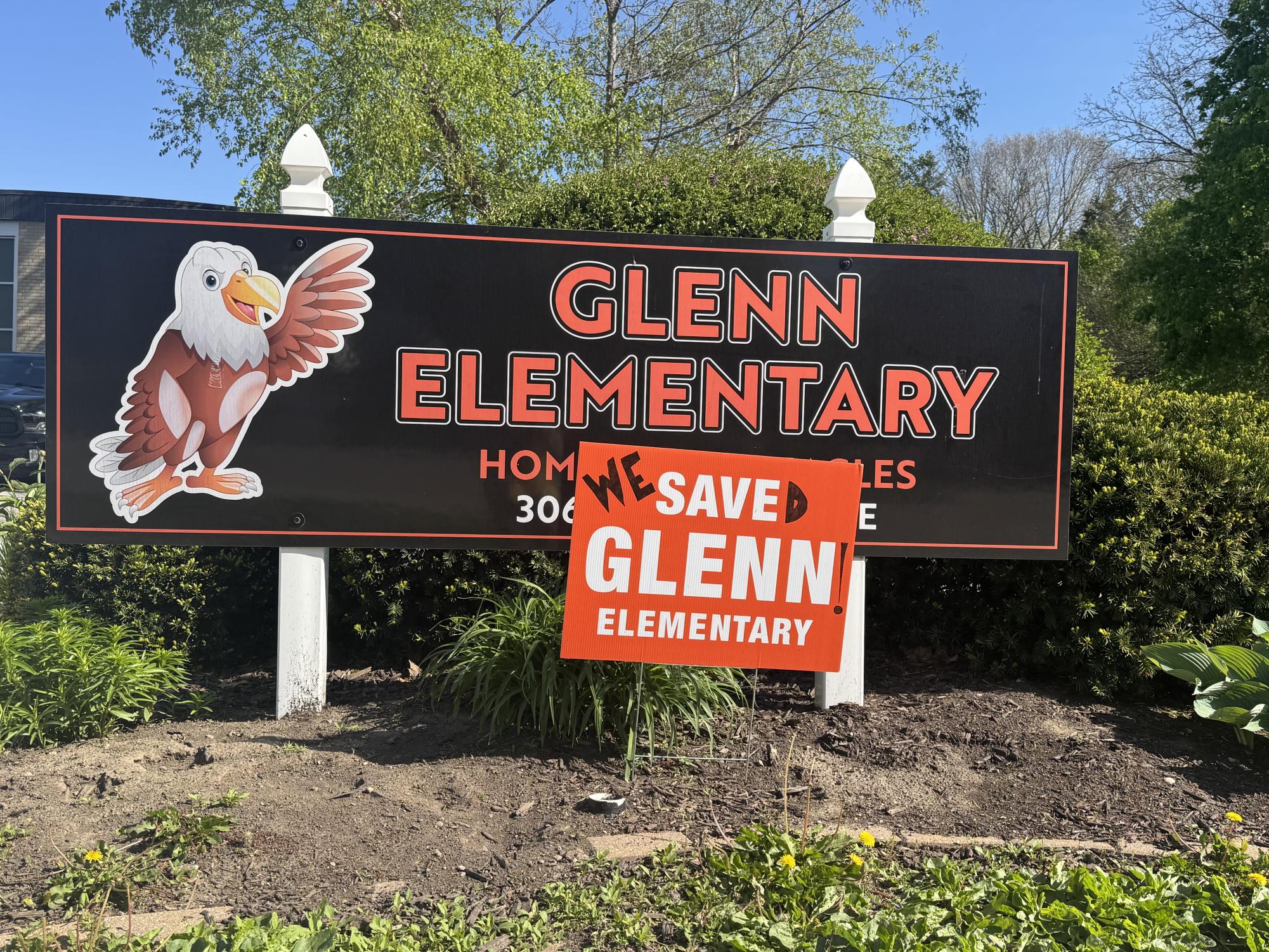
Presented during an April 9 webinar, the amended plan includes key changes from earlier drafts—keeping Glenn and Carlock elementary schools open and eliminating additional use of open enrollment areas. The board also amended language around a new facility for the district’s early learning center, aligning with the 18-22 building proposal and giving the district more flexibility to build or renovate.
Superintendent Dr. Kristen Weikle said public feedback played a major role in the adjustments. After more than 40 speakers addressed the board with concerns about enrollment planning on March 18, Weikle said the district listened.
“So many individuals, families, community members,” Weikle said, “provided valuable input, and so we certainly appreciate that.”
Community voices preserve Carlock and Glenn
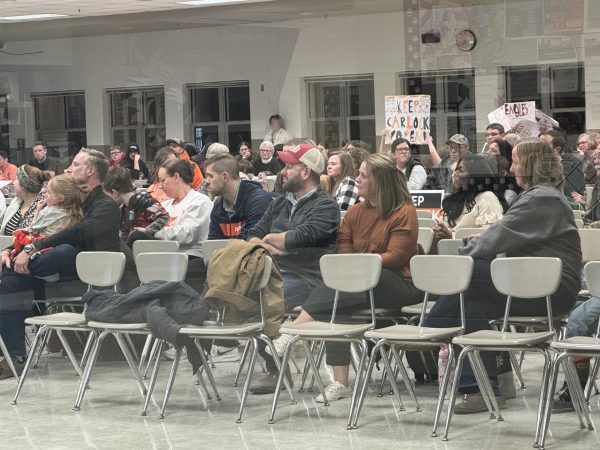
Throughout the planning process, community members expressed concern about proposals to close Carlock and repurpose Glenn. Following the March 18 meeting, the district shifted direction, and both schools will now remain open.
Unit 5 parent Heidi Lancaster said 79 percent of survey respondents supported either proposal two or a hybrid option because both kept the schools open. The response, she said, sent a “strong and consistent message.”
Unit 5 is keeping a “thriving, high-performing school” open, Lancaster said. Making opportunities equal for every student is not about “lines on a map or financial model,” she said, but about “where their children feel safe, where they feel known and where they are able to thrive.”
Carlock is central to its community’s identity. Rhonda Baer, mayor of Carlock, thanked the board for allowing the school to expand enrollment to a sustainable level.
“We don’t intend to waste that opportunity,” Baer said, “and we accept the challenge.”
Andy Litwiller, a Normal resident who lives near Glenn, said the school helps maintain a vibrant neighborhood.
“Glenn will continue to attract families with young children,” Litwiller said. “They breathe new life into our community in the center of town, they revitalize the surrounding neighborhoods and they take care of each other.”
Glenn will remain a walkable elementary school in the heart of town.
Michael Killenbach, a parent who moved to the surrounding area so his children could walk to school—just as his 75-year-old father once did—said the decision preserves something valuable.
Killenbach described the importance of seeing families walk together and children walking independently.
“That level of social trust is so sorely lacking in today’s society,” Killenbach said. “Whenever we can find it, we need to nurture it.”
Elimination of open attendance areas aims to improve equity
To address long-standing equity concerns, the district eliminated the additional use of open attendance zones, assigning those students a permanent elementary school.
Earlier proposals created uncertainty by potentially splitting students in the same neighborhood. Stephanie Banks, a Fox Creek teacher, said open attendance areas can complicate Title I and special education program funding.
By minimizing their use, the district provides more stability and predictability, “especially for the most vulnerable learners,” Banks said.
In earlier proposals, open attendance zones largely affected minority and low-income families. Clustering those students, Banks said, could have reinforced inequalities by concentrating greater needs and fewer resources in certain schools.
Sarah Eggie, a public commenter, affirmed the concern.
“If we are committed to equity, not just in words but in actions,” Eggie said, “then we must make decisions that disrupt the inequitable patterns, not reinforce them.”
The changes also aim to reduce student transportation time. Desha Cobb, a commenter who said she experienced 13-hour school days due to commute time, said longer bus rides for certain students do not promote educational access.
Jade Lamar, another commenter, said good intentions are not enough.
“Equity is not about intention,” Lamar said, “it’s about impact.”
The effect these open attendance areas could have had on marginalized, lower-income and minority communities, Lamar said, was too significant to ignore.
18-22 program to get dedicated facility
While an earlier proposal repurposed Glenn into a new facility for the 18-22 transitional program, multiple speakers said the program deserves a purpose-built space. Stephanie Davis, a paraprofessional at Glenn Elementary, was among them.
“The 18-to-22-year-old transitional program deserves a building designed just for their needs,” Davis said.
The program currently operates out of Eugene Field, a former elementary school that is not wheelchair accessible, limiting full use of all its floors.
Under the new plan, the program will relocate to a newly renovated or built facility tailored to students with cognitive or physical disabilities.
Kerry Connolly, a parent of a student in the program, said a new building will allow staff to expand programming.
It will “add more valuable instruction for a population that is chronically overlooked and underserved,” Connolly said.
Implementation and next steps
Changes will follow a phased implementation timeline tied to transportation adjustments, the reduction of portable classrooms and building renovations. Capital projects will be funded through 1 percent sales tax revenue and will not increase property taxes.
The 611 K-12 students directly affected will have options: they can remain at their current school if they provide their own transportation, or they can transfer early to their newly assigned school and receive district transportation once the move becomes official.
Some concerns remain about the continued use of existing open attendance areas and transportation equity. No single plan could satisfy all perspectives in a district that serves around 12,000 students, but the process incorporated community voices throughout.
The district’s focus throughout the study, Weikle said, was always to “provide the best possible opportunities to students.”