















![Coach’s Corner: Konopasek on Iron volleyball’s 34-6 run, what’s next [video]](https://nchsinkspot.com/wp-content/uploads/2025/11/Vball-season-recap.00_00_02_22.Still005.png)


![Postgame: Volleyball falls to Marist in supersectional [video]](https://nchsinkspot.com/wp-content/uploads/2025/11/Vball-postgame.png)



![Halloween candy cross section quiz [quiz]](https://nchsinkspot.com/wp-content/uploads/2022/10/Candy-cover-big-900x675.png)
![Average Jonah? [quiz]](https://nchsinkspot.com/wp-content/uploads/2022/05/average-jonah-900x600.png)



![[Photo Illustration]](https://nchsinkspot.com/wp-content/uploads/2025/09/trigger-words-1.png)


![On the Spot: Students, staff share their takes on groundbreaking music [video]](https://nchsinkspot.com/wp-content/uploads/2026/02/Untitled-7-1.png)

![The Up-Beat – Snow, stage sets and an Illinois upset [video]](https://nchsinkspot.com/wp-content/uploads/2026/01/Untitled-10.png)
![Coaches’ Corner: Witzig, Feeney break down team identity, key growth, the road to March [video]](https://nchsinkspot.com/wp-content/uploads/2026/01/Coaches-Corner-Jan-21-1200x675.jpg)
![On the spot: Community’s favorite movies [video]](https://nchsinkspot.com/wp-content/uploads/2026/01/On-the-Spot-7.png)



![On the Spot: Staff, students sound off on the Chicago Bears’ playoff run [video]](https://nchsinkspot.com/wp-content/uploads/2026/01/On-the-Spot-4.png)
![Hauntcert performers on why this year’s show hits all the right notes [video]](https://nchsinkspot.com/wp-content/uploads/2025/10/Untitled-2.png)


From gladiator sandals to low-rise jeans, the 2000s left a messy, memorable footprint on pop culture. Now one of the decade’s defining fashion films, “The Devil Wears Prada,” is headed back to theaters with a sequel scheduled for May 1, 2026.
That release date is a good excuse to look back at the characters who made 2000s style feel bigger than clothes themselves—outfits that doubled as identity, armor and, sometimes, a punch line.
While the biggest trends from their glory days are being recycled tenfold (we’ve all seen Hollister’s “new” henleys and babydoll tops), it’s worth highlighting what made some of film’s fashion icons. It isn’t just about outfits, but attitude—a look gets you noticed. Confidence is what makes it stick.
This list isn’t just about who wore the best outfits. It’s about who made a look feel like a moment.
No. 5: Marcus and Kevin Copeland, “White Chicks” (2004)
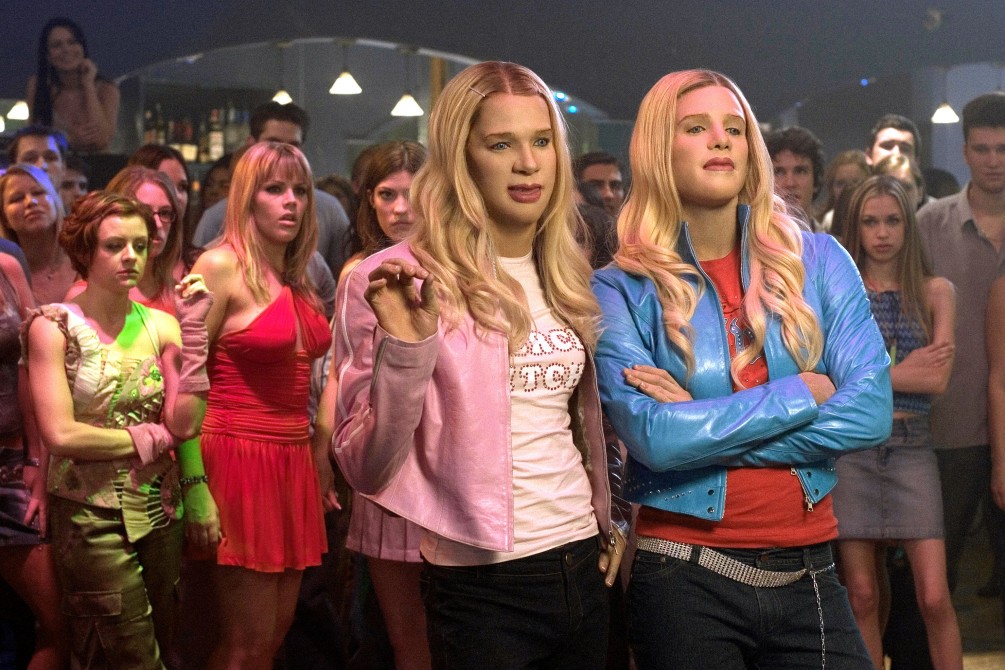
One of the decade’s most quotable cult comedies, “White Chicks” follows two FBI agents, Marcus and Kevin Copeland (Marlon Wayans and Shawn Wayans), who cannot catch a break and end up assigned to escort socialites Brittany and Tiffany Wilson in the Hamptons to help catch a kidnapper. In other words, they’re stuck babysitting.
When the plan falls apart, the agents go undercover in an extreme disguise, taking on the Wilson sisters’ identities to keep the mission alive—a premise built for broad comedy that some viewers today see as dated and uncomfortable.
The disguises are over the top, but that’s the point.
The characters commit completely, and that commitment becomes their “style.” They walk into every room like they own it, and their confidence carries scenes even when the outfits are intentionally loud. Case in point: the iconic dance-off scene.
The duo are dressed in the quintessential millennial “hot girl” uniform: low-rise jeans; baby tees that mix cute with controversial (where else but the 2000s could you buy a pink tee with the word “bitch” bedazzled in rhinestones?); and leather (pleather?) jackets in cotton-candy colors. Lindsay Lohan, Britney Spears, Christina Aguilera—eat your heart out, these looks and accessories are straight out of a mall-clone era.
Their fashion-forward outfits clash against their competitors—the Vandergeld sisters—who channel an early Hollister look: belly-button-baring ruffled miniskirts and cropped camisoles. They look hot, and they know it.
But hot doesn’t win dance-offs. It’s hard to shake it in 6-inch heels.
No. 4: The Plastics, “Mean Girls” (2004)
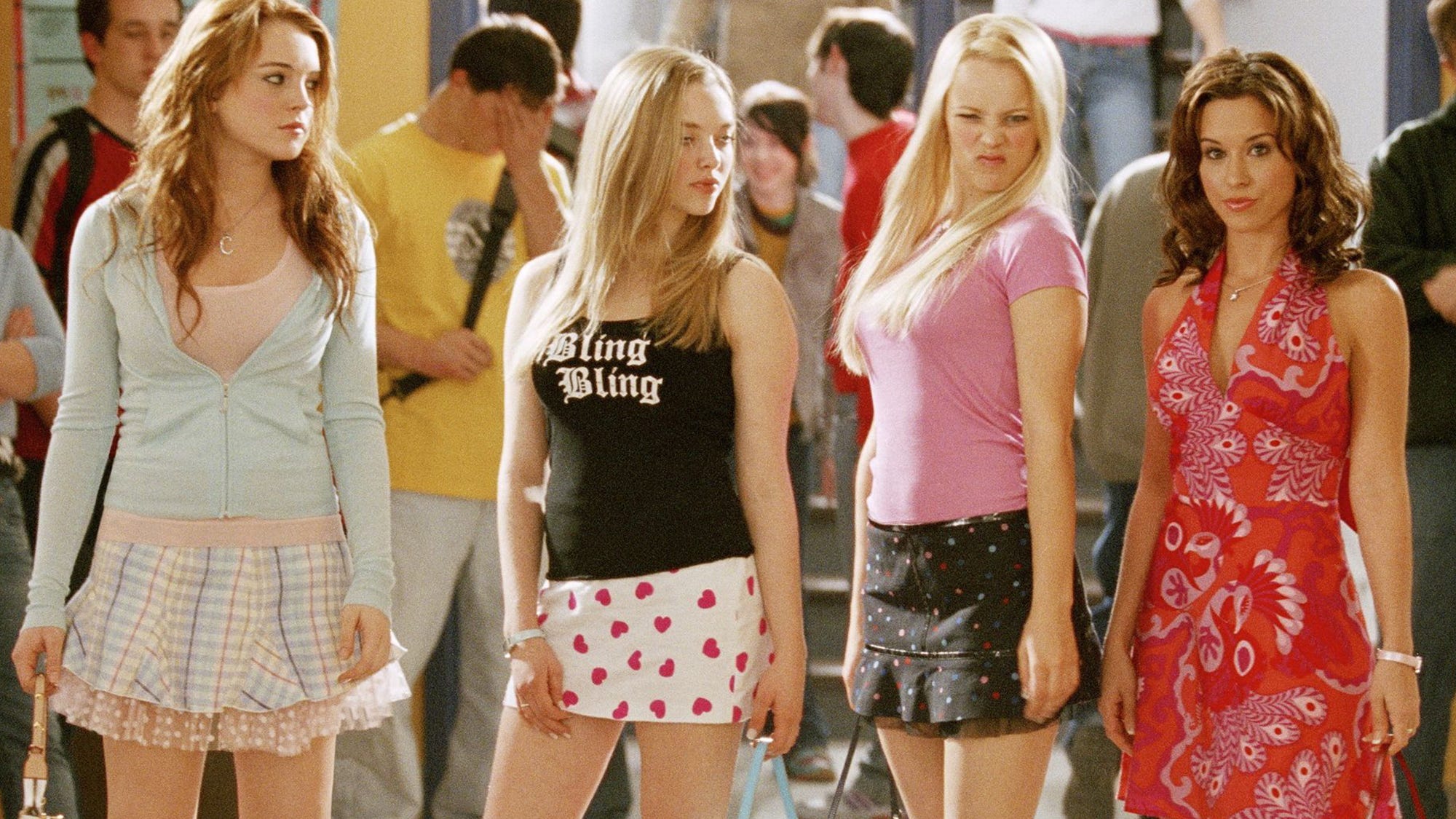
“Mean Girls” follows Cady Heron (Lindsay Lohan) as she tries to navigate high school culture and ends up pulled into the school’s top clique: the Plastics.
Gretchen Wieners (Lacey Chabert), Karen Smith (Amanda Seyfried) and queen bee Regina George (Rachel McAdams) treat fashion like a rulebook. Their standards are stricter than skinny jeans: no tank top two days in a row, no ponytail more than once a week, no sweatpants on Mondays and, most famously, “On Wednesdays we wear pink.”
The movie is packed with looks that still get referenced, copied and memed, from the Christmas performance costumes to the Halloween scene.
Imagine your mom walks in during the Plastics’ talent show performance of “Jingle Bell Rock.” The performance is so scandalous it’ll have you and your mom glowing redder than Rudolph’s nose. Their costumes read more Victoria’s Secret than Santa Claus: hot red latex miniskirts trimmed in white fuzz, matching tank tops and thigh-high stiletto boots. It makes you wonder what was going on in the 2000s. Also, are their tank tops cropped, or are the skirts just that low?
As you can tell from their skimpy Santa outfits, there’s rarely a time when they’re not matching in some way (it’s hard to look different from each other when they practically live by their made-up fashion commandments). Whether they’re dressing up for Halloween or just going to the mall, there’s always something tying them together: animal ears, flats, sweaters—the list goes on.
Their matching looks mirror their predatory social strategy: handbags as small as their hearts, miniskirts as short as their patience and heels as tall as their egos.
But the Plastics’ attitude is what keeps them out of the top three. Style without kindness curdles fast, and the Plastics spend most of the movie proving that.
No. 3: Nigel, “The Devil Wears Prada” (2006)
“The Devil Wears Prada” is arguably the fashion movie of the 2000s. It has lasted because it doesn’t just glamorize fashion, it shows how intense the industry can be, especially for someone trying to break in. The story follows aspiring (and blissfully ignorant) journalist Andrea “Andy” Sachs (Anne Hathaway) as she takes a job at a major fashion magazine and discovers the work comes with a price.
While Andy and her overbearing boss Miranda Priestly (Meryl Streep) sport looks that scream professionalism and class—prim, proper and chic—neither comes close to being the movie’s most reliable source of taste and truth.
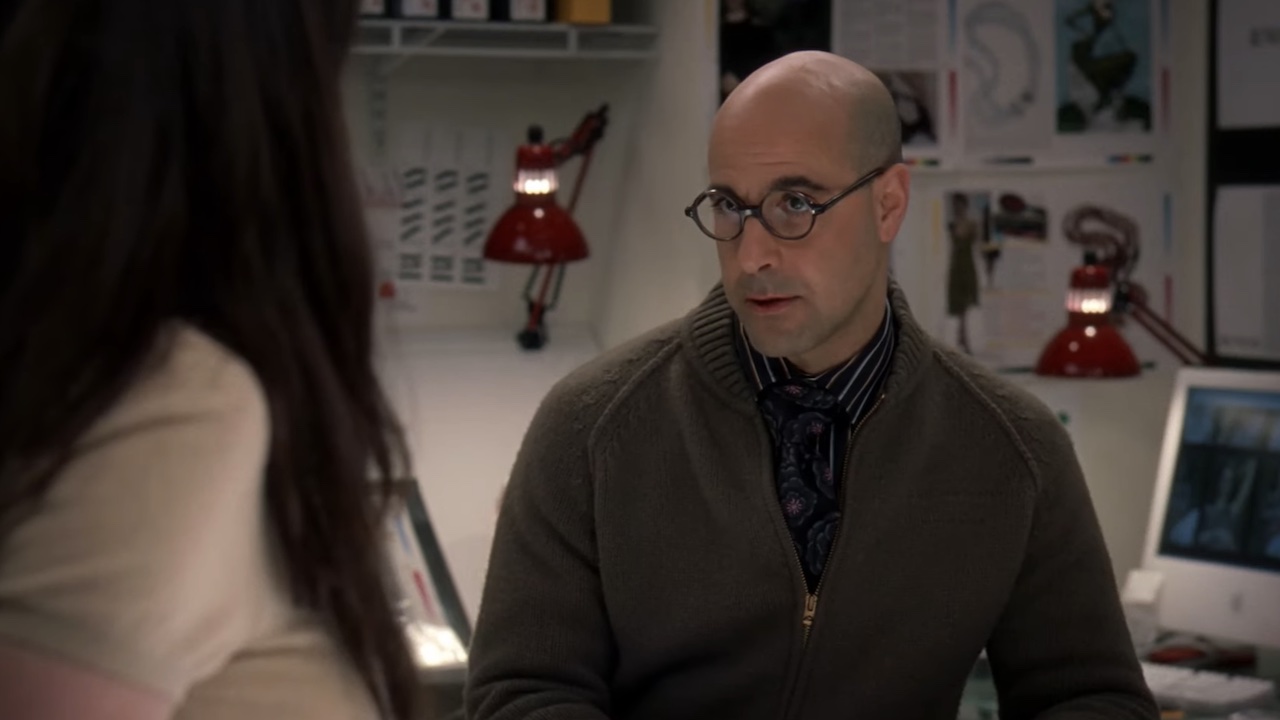
It’s Nigel (Stanley Tucci), Miranda’s right-hand man and the person who understands both the beauty and the brutality of the job. He’s the mentor who helps Andy build a wardrobe and a backbone, and he does it with sharp humor and sharper instincts.
If there were a Mount Rushmore of men who make bald look bold, Nigel would be front and center.
Vin Diesel, Dwayne “The Rock” Johnson? They have nothing on Nigel.
His glasses? Unorthodox, round like his head—a perfect accessory. Smart. Stylish.
He can master subtlety—gray flannel three-piece suits—and pull off a statement piece—a slate-and-charcoal plaid suit.
He knows how to put a look together from head to toe, pocket square to designer shoes. And despite looking tailored and polished, he somehow makes the looks seem effortless.
Nigel’s style isn’t always the loudest in the room, but his presence is.
He’s proof that being a fashion icon doesn’t require being the center of attention. Sometimes it means being the person who sets the standard everyone else is chasing.
No. 2: Jenna Rink, “13 Going on 30” (2004)
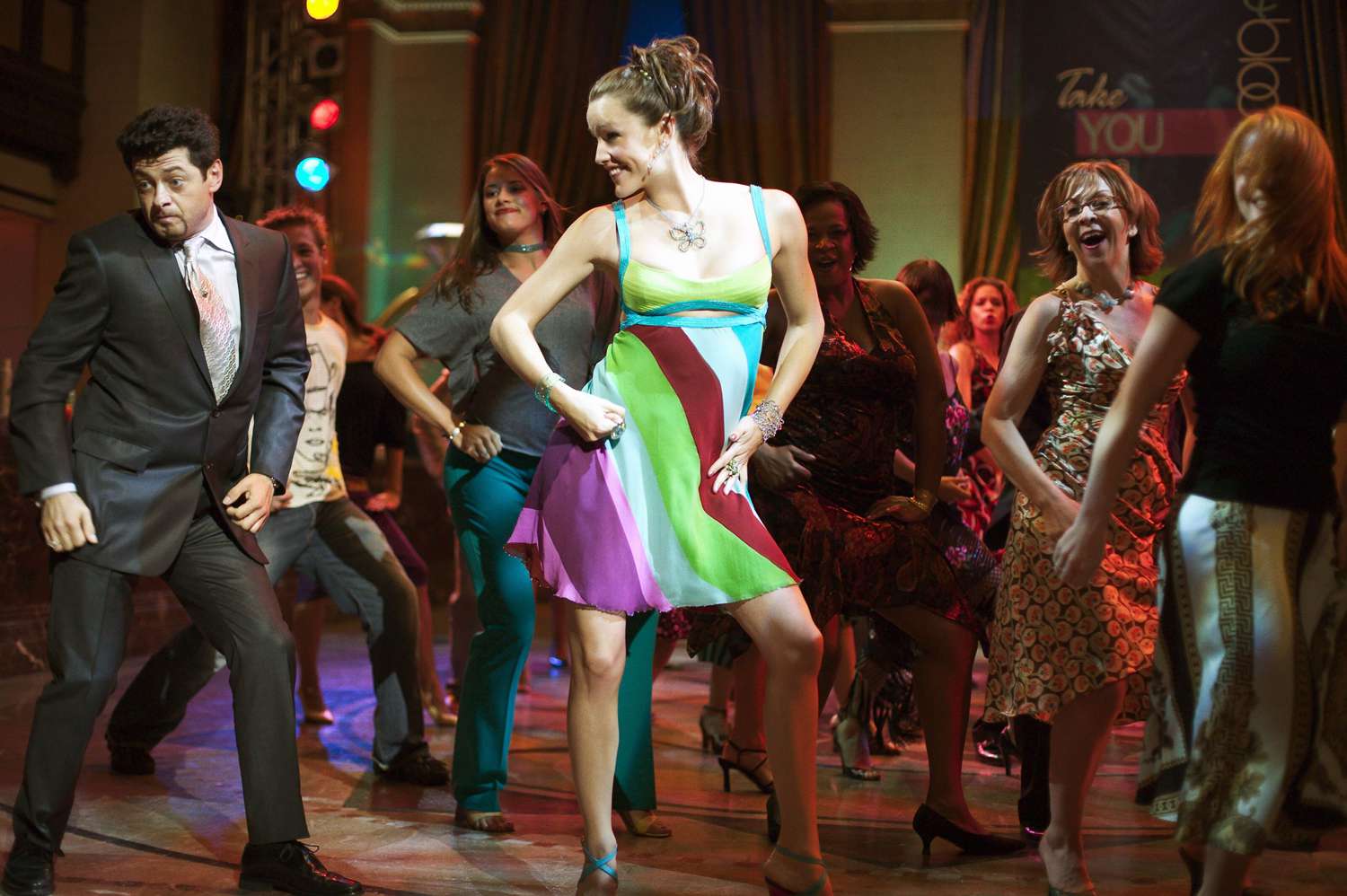
For a rom-com, “13 Going on 30” is a surprisingly emotional story about growing up, growing into yourself and realizing you do not actually want the life you once begged for. Jenna Rink (Jennifer Garner) starts out as an awkward, brace-faced teen who wants to be accepted and dreams of being “Thirty, flirty and thriving.”
Then the movie flips the script: A sprinkle of wishing dust later, Jenna wakes up 15 years older, working as an editor at “Poise” magazine, forced to figure out how she became the person she is.
Jenna’s outfits match her personality: bright, bold and ready to take up space.
From fun floral prints to playful pastel midi skirts, Jenna’s wardrobe screams whimsy. She’s like a little girl playing dress-up in her mom’s closet—a grown-up Fancy Nancy.
Each outfit is an opportunity to showcase her sense of self, and there’s never a dull moment, whether she’s eating a frozen treat the same banana-yellow as her skirt or carrying as many shopping bags as there are dots on her dress. Are some of her outfits a little childish for a 30-year-old woman? Sure, but what’s wrong with that?
We could learn a thing or two from Jenna: Stop being so afraid of what other people think and just wear what makes you happy.
The character’s almost blind self-assurance is what gave us one of the best outfits of the 2000s.
The movie’s most famous look, the striped minidress she wears during the “Thriller” scene, became shorthand for early-2000s confidence—the kind that says, “I belong here,” even when you’re not totally sure you do.
Jenna earns No. 2 because her style is memorable, and her character arc is the point: Fashion is fun, but self-respect is better. The only thing keeping her from No. 1 is consistency. Some of her looks are iconic. Others fade into “cute,” which is not the same thing.
No. 1: Elle Woods, “Legally Blonde” (2001)
There was never much suspense about the top spot.
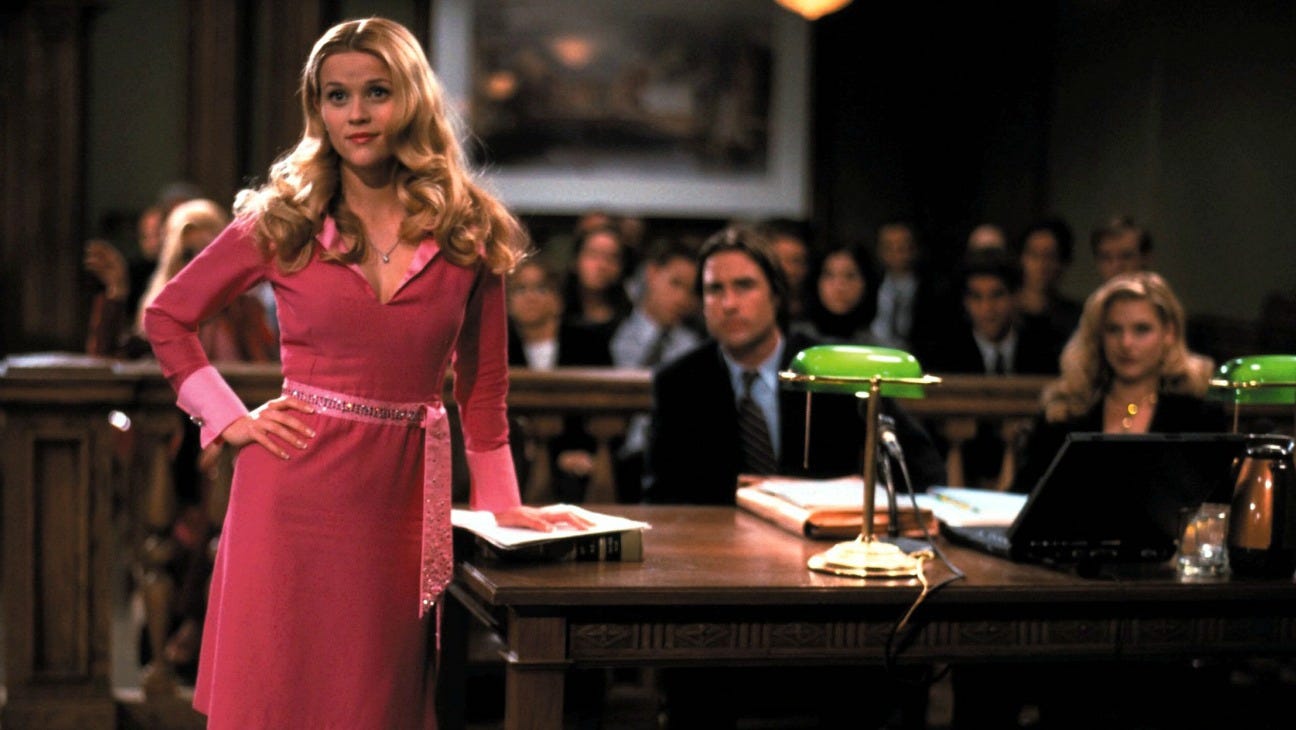
Elle Woods (Reese Witherspoon) is the sorority girl everyone underestimates until she turns into a Harvard Law student everyone has to respect. Her style is unapologetically feminine, and that’s exactly why it matters. Elle refuses to treat “girly” as an insult, and she proves she can be both polished and powerful.
Courtrooms are the definition of “old money”: neutral palettes, wood paneling and muted colors. They’re almost as depressing as the millennial-gray apartments you find all over Zillow (the only thing saving them is the natural wood accents).
Usually, the people inside dress themselves in the same uninspiring color scheme, but Elle turns up the volume.
In a room full of people wearing boorish black and navy suits, she looks pretty in pink.
A hot pink midi dress with a rhinestone sash around her waist and a matching pair of sparkly, sandal-strapped heels, plus blush accents on the collar, sash and cuffs for a pop of color. Her outfit puts the fun in functional—who says you can’t serve the law and a look?
While there’s no doubt that Elle knows how to look smart with style, some of her best outfits are when she’s focused on working it instead of just working. From lounging around campus in a sequin bikini top and baby pink capris to getting her nails done in a sheer sunflower blouse and flared black jeans, Elle is always dressed to the nines.
Her clothes never become a costume she hides behind. They stay part of who she is, even as she grows. That’s the difference between dressing well and being a fashion icon: Elle doesn’t just wear the look, she owns it.
“What, like it’s hard?”
Two decades later, the line still lands because it captures her whole vibe: confident, funny and completely uninterested in shrinking.
Of course, these five aren’t the only 2000s characters with standout style. Fashion is personal, and “iconic” will always be a debate. But the characters who last are the ones who made style feel like more than fabric—a signal of identity, confidence and the courage to take up space.