












![Coach’s Corner: Konopasek on Iron volleyball’s 34-6 run, what’s next [video]](https://nchsinkspot.com/wp-content/uploads/2025/11/Vball-season-recap.00_00_02_22.Still005.png)


![Postgame: Volleyball falls to Marist in supersectional [video]](https://nchsinkspot.com/wp-content/uploads/2025/11/Vball-postgame.png)


![Halloween candy cross section quiz [quiz]](https://nchsinkspot.com/wp-content/uploads/2022/10/Candy-cover-big-900x675.png)
![Average Jonah? [quiz]](https://nchsinkspot.com/wp-content/uploads/2022/05/average-jonah-900x600.png)



![[Photo Illustration]](https://nchsinkspot.com/wp-content/uploads/2025/09/trigger-words-1.png)


![On the Spot: Students, staff share their takes on groundbreaking music [video]](https://nchsinkspot.com/wp-content/uploads/2026/02/Untitled-7-1.png)

![The Up-Beat – Snow, stage sets and an Illinois upset [video]](https://nchsinkspot.com/wp-content/uploads/2026/01/Untitled-10.png)
![Coaches’ Corner: Witzig, Feeney break down team identity, key growth, the road to March [video]](https://nchsinkspot.com/wp-content/uploads/2026/01/Coaches-Corner-Jan-21-1200x675.jpg)
![On the spot: Community’s favorite movies [video]](https://nchsinkspot.com/wp-content/uploads/2026/01/On-the-Spot-7.png)



![On the Spot: Staff, students sound off on the Chicago Bears’ playoff run [video]](https://nchsinkspot.com/wp-content/uploads/2026/01/On-the-Spot-4.png)
![Hauntcert performers on why this year’s show hits all the right notes [video]](https://nchsinkspot.com/wp-content/uploads/2025/10/Untitled-2.png)



When the “Stranger Things” series finale dropped four months ago, it didn’t just close the door on Hawkins. It shut the lights off on a world that feels almost impossible now: no location sharing, no doomscrolling, no group chats keeping tabs on every move.
Once it was over (sorry, no secret ninth episode), the thing we missed most wasn’t the Upside Down.
It was the 1980s nostalgia: the analog, awkward, loud-in-person version of being a kid.
The show’s ’80s vibe has always been part of the charm, but after the ending, the nostalgia hits differently. It’s not just about the hair and the neon. It’s about freedom, boredom and real-life hangouts—the stuff our phones quietly replaced.
No phones, no tracking, no constant check-in
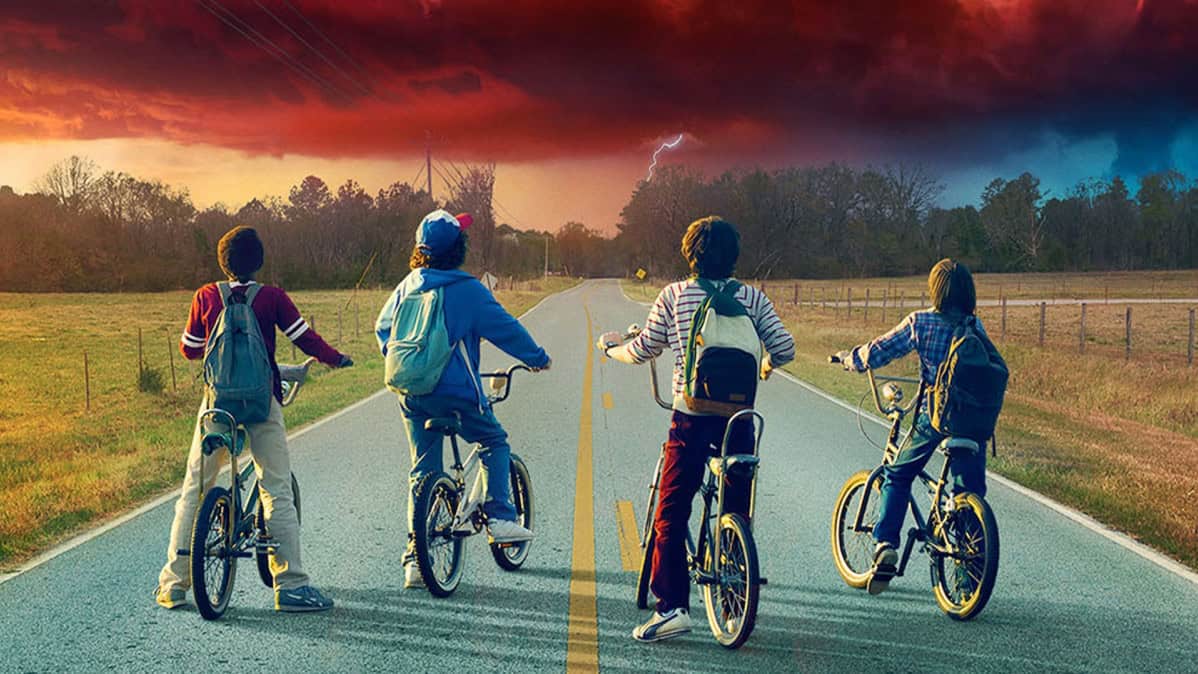
The downside of modern tech? How easy it is for our friends, our parents to track our every move. Apps like Life360, Snapchat and Instagram make it normal.
It’s convenient, sure. It’s also kind of suffocating.
In “Stranger Things,” the core gang doesn’t “head out”—they vanish.
In the very first episode, they leave Mike’s basement after a long Dungeons & Dragons session and splinter into the dark on bikes, with nothing but walkie-talkies and the confidence that someone will be roughly where they said they’d be.
That’s the thing: the plan can be vague because the world isn’t constantly re-anchoring you.
You see it over and over in Season 1: they ride from Mike’s house to the Hawkins Lab perimeter, to the quarry, to the woods, to the AV Club classroom—on two wheels, no adult escort and no digital breadcrumb trail.
Their parents don’t get a pin drop that says, “Lucas arrived,” or “Dustin left,” or “Mike’s battery is at 9%.”
The silence is normal, not suspicious.
Parents don’t get a notification if the gang takes a wrong turn, lingers somewhere too long or moves “too fast.” The kids get to make choices without an audience.
That’s why those biking scenes hit so hard. It’s not aesthetic. It’s freedom.
Bikes aren’t just transportation in Hawkins—they’re a permission slip. They let you stretch a 20-minute plan into a three-hour story: stop at the arcade, detour through the woods, add one more lap around the neighborhood because the night feels like it belongs to you.
If parents didn’t have Life360, we could probably wander Bloomington-Normal the same way—cruising side streets, stopping wherever, letting the afternoon go long. Instead, our freedom comes with a battery percentage and a ping.
Mall culture, back when it meant something
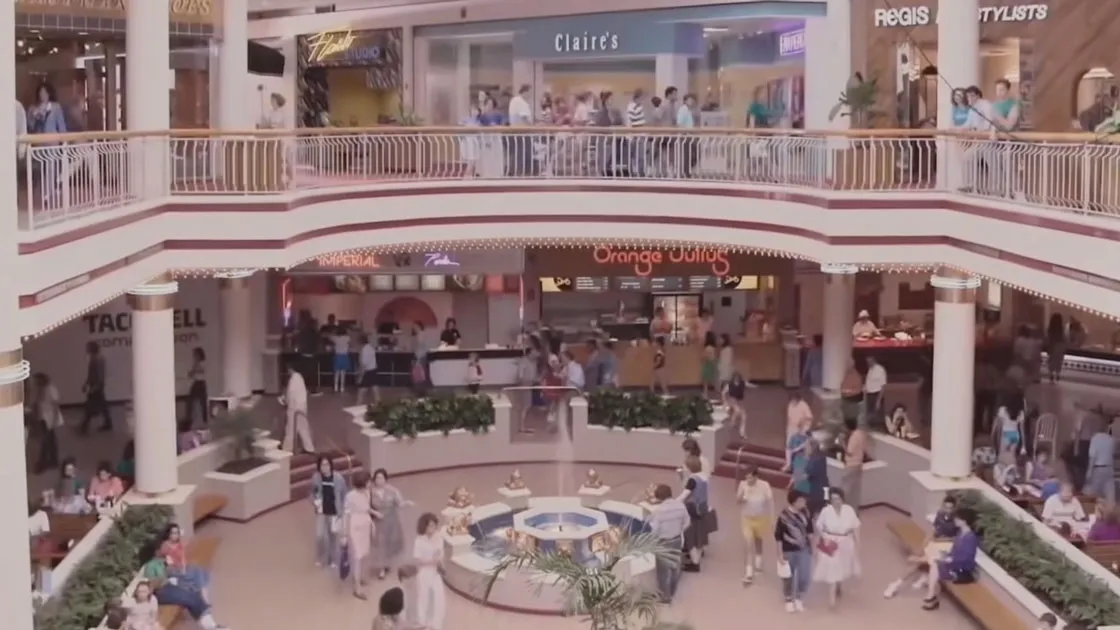
Season 3’s Starcourt Mall is basically a character: its color palette, the escalators, the packed food court, the arcade glow, the sense that you could wander for hours and the day would still feel full. There are actual stores you can browse with your friends instead of shopping alone on your bed.
Compare that to what mall culture feels like now. Is Eastland Mall a places teens can just exist for hours without needing a ticket, a reservation or an adult escort?
For decades, the mall was the default teen hangout: walk, talk, people-watch, try on clothes, split fries, circle back around, repeat.
It’s not glamorous. That’s the point. It’s a third place—not home, not school—and “Stranger Things” understands how much that matters.
The point isn’t “shopping.”
The show treats Starcourt like a teen ecosystem. You see groups drifting, looping, doubling back. You see how the mall lets friendships overlap without scheduling. Steve and Robin at Scoops Ahoy aren’t just in a job—they’re inside a crossroads where information, gossip, flirting and boredom all collide.
“Stranger Things” understands that a third place doesn’t have to be meaningful on paper to be meaningful in life. It’s meaningful because it’s available.
Color, chaos and clothes with personality
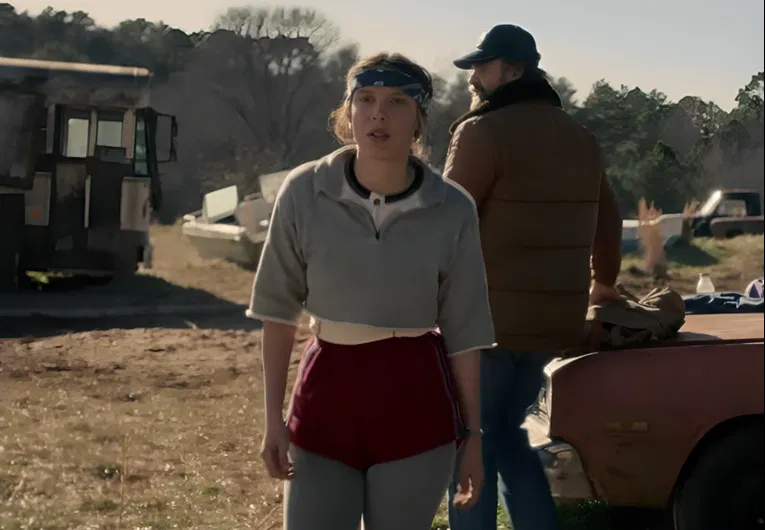
The wardrobes aren’t subtle. That’s also the point.
“Stranger Things” makes style feel like a social language again.
Dustin’s trucker hat isn’t just an accessory—it’s an identity flag.
Max’s skater look reads like armor.
Steve’s Scoops Ahoy sailor uniform is comedy and a status shift: the popular guy is suddenly trapped in a ridiculous costume, which is part of how the show humbles him and makes him warmer.
And then there’s Eleven—walking around in outfits that look like experiments in selfhood. Her early-season looks are literally other people’s attempts to disguise her; later, her clothes become attempts to decide who she is.
Fashion isn’t “content.” It’s character, it’s individuality, it’s personal identity.
In a world where everyone was shopping at the same stores, it somehow felt less mass-produced and more intentional—less algorithm, more personality. Nobody was chasing some influencer’s aesthetic. They were just getting dressed. And making a statement.
The show’s look is packed with bright colors, bold patterns and choices that feel unapologetic—the kind of outfits that don’t worry about matching a feed. Compared with today’s endless “groutfits” (gray on gray), the ’80s style feels almost rebellious.
Even when it’s questionable—like pairing shorts with leggings—it’s memorable.
And some of it doesn’t even feel outdated. Denim jackets, high-waisted jeans and baggier silhouettes have all cycled back into what people wear now.
The difference is that “Stranger Things” makes it feel fun again, like getting dressed is part of the day instead of something you do quickly before you check your phone.
Here’s the part that sticks after the finale: Hawkins feels bigger because the kids aren’t constantly entertained.
They get bored, and then they do something. They build Cerebro. They play games. They invent theories. They ride around until they find trouble. They talk in circles. They make bad plans. They waste time together.
Modern tech tries to eliminate boredom, but “Stranger Things” makes the case that boredom is where adolescence actually happens. Boredom is the space where you discover what you like, who you’re loyal to, what risks you’ll take, what stories you’ll tell later.
After the ending, that might be what we miss most. Not the monsters—the reminder that hanging out used to mean you were there, not just online at the same time.
And maybe the real lesson of Hawkins is simple: life feels bigger when you’re not being tracked through it.
That’s why “Stranger Things” is still lingering in our minds months after the finale. Beneath the monsters, the synths and the neon, it reminds us that growing up once meant getting lost for a while—on your bike, at the mall or just in the middle of a long afternoon with nowhere to be but together.